Categories
Artports

Halal or not halal: Challenges and opportunities for Rotterdam, Europe’s busiest port

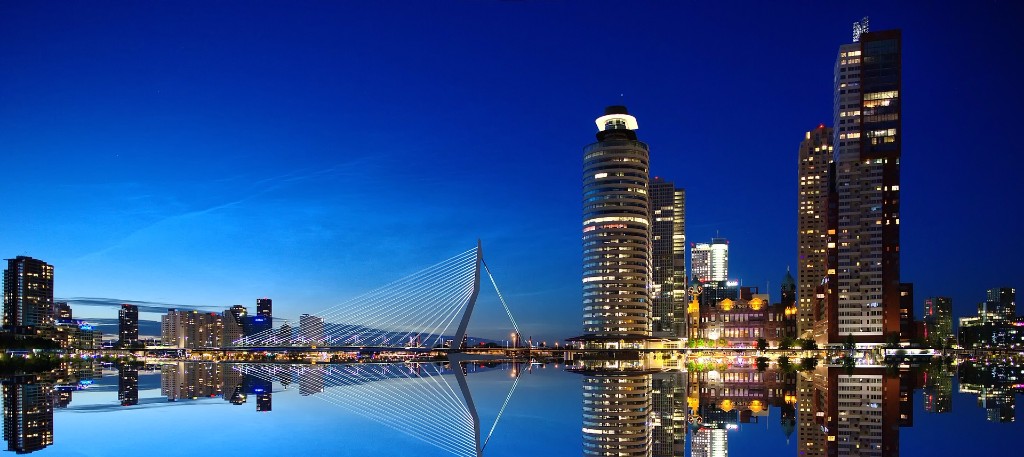
Home to one of the world’s busiest ports, the Netherlands is the gateway to Europe. As such, it seems the perfect entry point for halal products to find their way to the continent’s millions of Muslims. However, halal storage and logistics in the port of Rotterdam remain limited.

Halal or not halal?
In 2007, numerous Dutch media outlets reported that Rotterdam port had been declared halal. The city’s former mayor Ivo Opstelten had been handed a halal certificate at the World Islamic Economic Council in Kuala Lumpur. It appears, however, the media got it all wrong.
“Halal storage of goods is possible within the port of Rotterdam, but it is not a priority for the port,” RPA Press Officer Tie Schellekens told Salaam Gateway. He did not know what the 2007 certificate was about or why it had been given.
According to Dr. Marco Tieman, CEO of the logistics consultancy firm LBB International, the port of Rotterdam never received a halal certificate.
“The port had developed a handbook with halal guidelines,” Tieman told Salaam Gateway. “Maybe it received a certificate for that. As far as I know, Eurofrigo is the only certified firm offering halal facilities in Rotterdam.”
Founded in 1978, Eurofrigo is specialized in the storage, forwarding, and customs clearance of temperature-controlled food products. It operates two cooling and freezer facilities in the Rotterdam harbor with a total storage capacity of over 67,000 pallet places. In 1988, the firm became part of Nichirei Corporation Tokyo.
“In those days [2006/2007], Rotterdam liked to promote itself as the biggest halal harbor in Europe,” Eurofrigo’s CEO Derk van Mackelenbergh told SalaamGateway. “But that sounded better than it was. It imported palm oil, but apart from that, there was nothing halal about Rotterdam.”
With five refineries producing vegetable oils, the port of Rotterdam plays a key role in supplying resources to the European food industry. Two of them produce palm oil, which makes up about 30 percent of the world market in oils and fats. They are owned by Malaysian multinationals Sime Darby Group and IOI.
Challenges
“Neele-VAT Logistics was the first logistics firm in Rotterdam to be halal-certified,” said van Mackelenbergh. “Following enquiries from Malaysia and Indonesia, we followed their lead in 2006. The idea was to establish a platform. Together, we could handle halal storage and distribution in both the dry and temperature-controlled markets. But the results have been disappointing.”
Neele-Vat Logistics is a major Dutch logistic service provider with a presence across Europe. The firm employs some 500 people and has an annual turnover of some 230 million euros.
“We invested some 300,000 euros to be halal-compliant, but it turned out that importers didn’t want to pay more,” Rene Bongers, CEO of Neele-Vat Logistics, told Salaam Gateway. “For seven years the process only cost us money and so for the past three years we are no longer focused on halal.”
The firm is no longer halal-certified but Eurofrigo still is. All halal products are stored separately to prevent cross-contamination, while all its employees have attended a special halal training course.
“We’ve invested quite some time and money on certification and facilities,” said van Mackelenbergh. “So far it brought us a lot of publicity, but little business. We handle a lot of chicken coming from Brazil. However, halal as a percentage of our total turnover remains negligible.”
Opportunities
One way to enhance halal business activities in the port of Rotterdam is by improving statistics. “We’re convinced that there are considerable quantities of halal products imported from outside the EU, which is all potential business for us,” said van Mackelenbergh. “However, halal is not an official category in the port’s statistics and so it is almost impossible for us to find out how much of what came from where.”
In addition, very few halal products are exported. For example, the Netherland’s biggest halal producer, Pure Ingredients, distributes its frozen snacks mainly by truck in the country, Belgium, France and Germany, while domestically butchered halal meat is for local consumption.
Tieman believes Rotterdam and Eurofrigo should wait for business to pick up, both in terms of import and export. “Rotterdam and the Netherlands arrived early on the halal scene. Perhaps too early,” he said.
The number of Muslims is set to reach 10 percent of the total EU population by 2030, while the average Muslim consumer is likely to become more halal conscious.
“The difficulty of halal logistics is the last mile,” said Tieman. “In terms of import, the flow of halal goods to European consumers is limited, which results in relatively high transport costs. Innovation in the form of special transport boxes can offer a solution.”
“In terms of export, Asia is an important export destination and demands halal certification,” he said. “As more and more factories in Europe seek halal certification, distribution of halal goods will increase and, consequently, the demand for halal logistics.”
About the port of Rotterdam
The port of Rotterdam is Europe’s busiest. Handling 466.4 million tons of cargo in 2015, Rotterdam moved more than twice as many goods as Europe’s second biggest port, Antwerp, and more than three times as many as Hamburg.
Most cargo—over 300 million tons—consisted of dry and liquid bulk, nearly two thirds of which were crude oil and oil derivatives.
The container port handled some 126.2 million tons.
From Rotterdam goods reach over 500 million consumers by boat, train or truck. Included in this number is an estimated 19 million Muslims in the European Union (EU), as of 2010, according to Pew Research.
The Rotterdam Port Authority (RPA) in 2015 recorded a turnover and profit of 676.9 million euros and 211 million euros respectively.
Categories
News Tourism

Promising outlook for halal industry in Western part of Europe

Sustained migration flows from majority-Muslim countries to Western Europe, combined with the favorable demographic dynamics of Muslim populations in Europe, will create strong demand for halal goods and services, which are growing from a low base in the region. Food will remain the most developed segment, but other segments such as Islamic clothing and financial products will also see growing interest.
Western societies have become much more multicultural over recent decades, and we expect this trend to continue over the coming decades, amid migration flows and more favorable demographic dynamics among minority groups. Given weak demographic dynamics in most developed markets – characterized by low or negative population growth and aging consumers – this will provide a bright spot to consumer-oriented industries. While there is no single ethnic group emerging in Western Europe – unlike in the United States where Hispanics are the dominant minority ethnic group – we see strong opportunities in targeting Muslim consumers in Western Europe by increasing the offering of halal goods and services.

Categories
News

Why China wants a bite of the booming halal food market

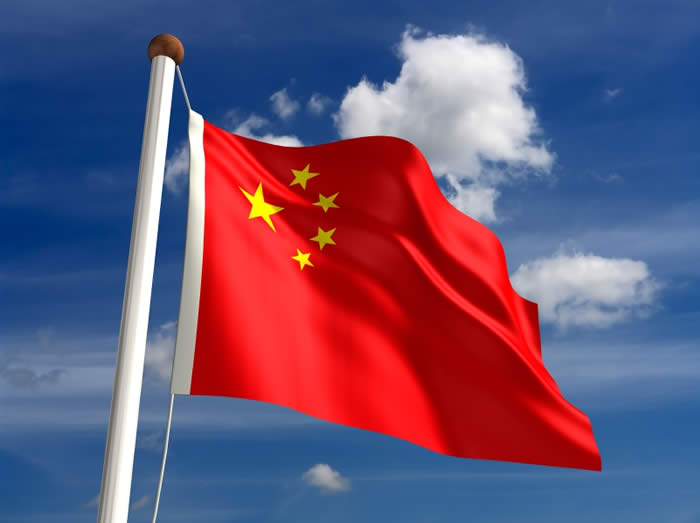
A new Euromonitor report forecasts that Muslim consumers will make up more than a quarter of the world’s population by 2030, and China wants to play an active role in feeding them. Chinese companies are increasingly flexing their muscles in the burgeoning market for halal food – one a report last year commissioned by the Dubai Chamber of Commerce said would be worth $1.6 trillion by 2018 – while the government is also eyeing halal-focused pacts with regional partners to broaden the country’s export portfolio.

Under Islamic law, halal food must be strictly free of alcohol, pork, tobacco or lipids from animals. Animals destined to be sold as halal meat must also slaughtered in accordance with religious guidelines. China is not an obvious candidate as a halal food powerhouse. The 26 million-strong Muslim population make up just 2 percent of China total population, with the vast majority living in Xinjiang and Ningxia provinces in Northwest China, the most underdeveloped part of the country.
China, however, is forging ahead. Under its “One Belt One Road” initiative that aims to recreate the Silk Road land and maritime trade routes, China has sought opportunities for halal trade with Muslim and Arab countries through bilateral trade agreements. In Linxia city, in China’s Gansu province, several companies have struck trade agreements with Turkey and Kazakhstan to export manufactured food products, reported Want China Times. China has also set up networking conferences and seminars, including the Sino-Malaysian Halal Food and Muslim Supplies Certification and Industry Cooperation Seminar that took place in July this year. And it has created infrastructure to support the halal trade, including the construction of halal food and Muslim supplies manufacturing hubs such as the Wuzhong Halal industrial park, in the Muslim stronghold of Ningxia, which has attracted 218 companies.
It is not just external demand that is driving China’s interest in halal. Joy Huang, China research manager at Euromonitor International, told CNBC that demand was also underpinned by non-Muslim mainland residents. “Halal food is considered to be healthy and hygienic, given the high standards for manufacturers,” Huang said. “Non-Muslims think that [halal food] is safer, given the number of food safety scandals in China,” she added. Major local food players are jumping on the bandwagon to meet the growing domestic appetite for halal products. Shineway Group, one of China’s largest processed meat companies, was an early starter, investing $310 million in a halal meat production base in 2009.
But even halal providers in China have suffered from food safety scares. The country got its first large halal foods certification center, the Ningxia Halal Foods International Trading Certification Center, only in 2014. It is permitted to certify halal foods in several provinces. And while certification rules are improving, most halal centers are only operated at the regional level, and lack national standardization and legislative support. According to Euromonitor, this is because Muslims are a minority in China and the government is more focused on general food safety than the religious requirements of a relatively small group of consumers. There are also concerns that China’s slew of food safety scandals could hinder the growth of Chinese halal food exporters. This is unlikely, however, to be a long lasting roadblock.

Categories
Toerisme

Halal toerisme: booming business?

Op Halal Expo Europe passeert ook halal toerisme de revue

Op zaterdag 01 en zondag 02 december vindt in Marrakech Halal Expo Africa plaats. Een plek waar ondernemers uit binnen- en buitenland hun kennis, producten en diensten op het gebied van halal kunnen overbrengen, uitstallen en aanbieden. Een minder belicht aspect in de wereld van halal, maar desalniettemin een groeiend fenomeen, is halal toerisme. Op de beurs is ook Said Elamraoui te vinden, hij verzorgt op donderdag 16 april een seminar over halal reizen.

Elamraoui is door zijn vele activiteiten en jarenlange ervaring een specialist op het gebied van (halal) toerisme. Hij is adviseur voor een aantal ministeries van Toerisme in de MENA-regio (Middle East, North Africa). Ook is hij eigenaar en touroperator van Atlasnomad Group, een portaal op het gebied van reizen binnen het reguliere en het religieuze segment. Vorig jaar richtte hij het keurmerk Hadjinfo op, “dé organisatie die consumenten en bedrijven voorlichting biedt over de hadj en umrah markt.” Binnen de reiswereld is halal toerisme een opkomend fenomeen.

Wat houdt halal toerisme precies in?
“Halal toerisme is een nieuw ‘product’ op de markt voor toerisme, ontwikkeld om de behoeften en overtuigingen van de islamitische reiziger tegemoet te komen. Dit kan variëren van halal spa’s tot gebedsruimtes op luchthaventerminals. Ook zijn steeds meer hotels bezig met aanpassingen om islamitische toeristen aan te trekken. Daarbij moet je denken aan halal voedsel, aparte zwembaden voor mannen en vrouwen, geen alcoholische dranken en strandgebieden met de islamitische zwemetiquette.
Het is booming business en de wereldwijde toerisme-industrie maakt zich op voor de verwachte hausse in islamitische reizen de komende tien jaar.”

Bij welke reisbureau’s kunnen moslims terecht voor een reis die halal is?
“Naast de hadj en umrah reizen die reisbureau’s aanbieden, is Atlasnomad een van de drie reisbureau’s in Nederland gespecialiseerd in halal reizen. Wij hebben hotels die de islamitische voorschriften in acht nemen. Hier wordt geen alcohol geschonken en er zijn gescheiden zwembaden, recreatiegebieden en spafaciliteiten voor mannen en vrouwen. De entertainmentprogramma’s voor volwassenen en kinderen zijn in overeenstemming met de islamitische normen. Daarnaast worden diverse sportieve activiteiten georganiseerd. Het gaat zelfs zo ver dat vrouwen in de islamitische dresscode kunnen duiken.”

In welke delen van de wereld is halal toerisme booming business?
“In veel verschillende en soms ook onverwachte landen. Japan is bijvoorbeeld een vrij homogeen land met slechts 100.000 praktiserende moslims. Tot nu toe ervaarden islamitische reizigers een vakantie in dit land niet echt als prettig. Dat is echter aan het veranderen. Japanse restaurants bieden halal walvisvlees en belangrijke luchthavens beschikken nu over gebedsruimtes en bieden hijabs gemaakt van Japanse zijde en andere halal-gecertificeerde souvenirs. Toerisme naar Japan wordt sterk gepromoot in Zuidoost-Azië, zoals Indonesië, het land met het grootste aantal moslims ter wereld. Halal toerisme is ook in Nieuw-Zeeland op komst. Ook dit land wil profiteren van haar geografische positie ten opzichte van enkele landen met veel moslims. De afgelopen jaren is moslimtoerisme in Nieuw-Zeeland flink gegroeid. Afgelopen augustus is het aantal islamitische bezoekers van het land met 141% gestegen in vergelijking met dezelfde maand vorig jaar.”

En een ander voorbeeld, iets dichter bij huis?
“Een ander voorbeeld is Kroatië. Het eerste halal certificaat in Kroatië werd onlangs toegekend aan de grootste en sterkste hotelgroep op het eiland Krk: Hoteli Baška. Met het halal certificaat wil Hoteli Baška te kennen geven dat de kwaliteit van haar service voor alle gasten, ook die van islamitische afkomst, op de eerste plaats staat.”

De toeristische sector in de islamitische wereld lijkt me niet per definitie ook halal. Hoe manifesteert halal toerisme zich in deze regio?
“Turkije investeert veel op dit gebied, ingegeven door de groeiende vraag naar halal toerisme in het land.
Het land probeert zich te positioneren als een voorname gezondheids-en wellness bestemming voor rijke toeristen uit Europa en het Midden-Oosten. Turkije heeft een ideale positie en profileert zich als baken tussen de negatieve impact van de euro en de politieke instabiliteit in het Midden-Oosten.”

Wat is er op Nederlandse bodem te vinden?
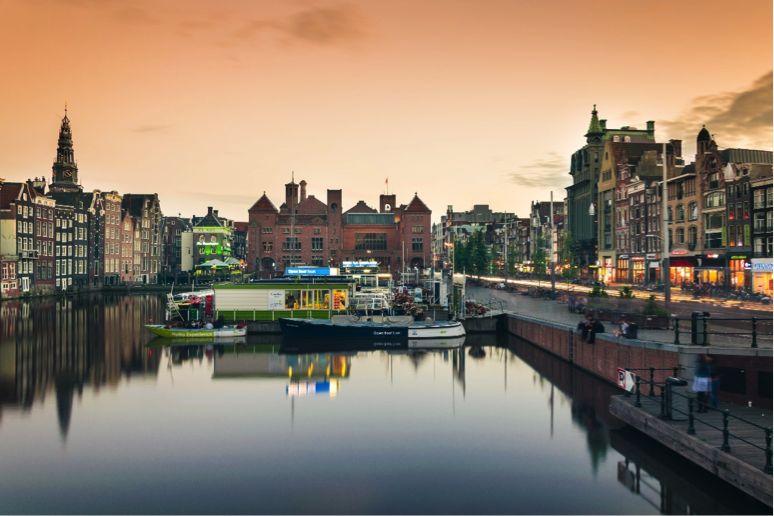
“Ik noemde zojuist al Kroatië, maar ook andere Europese landen investeren in halal toerisme. In Rome vond afgelopen november een congres plaats over het investeren in halal toerisme. Italië is natuurlijk een echt toeristenland en wil ook inspelen op de behoeften van islamitische toeristen. Ook Spanje organiseerde vorig jaar een conferentie over halal toerisme. In Nederland zien we wat kleine projecten verschijnen, zoals hotels. Ik zie deze investering in moslimvriendelijk toerisme als een stap in de goede richting.”

Zijn er zaken waar reisbureau’s die halal reizen samenstellen en aanbieden tegen aanlopen?
“Momenteel zijn er maar drie reisbureau’s die halal reizen aanbieden. De rest van de reisbureau’s kunnen dat niet door gebrek aan kennis en expertise. Ik constateer dat vooral de hadj en umrah reizen met veel problemen kampen. De organisatie, betrouwbaarheid en prijs-kwaliteitverhouding laten nog veel de wensen over. Dat is ernstig, want de vraag hiernaar neemt alleen maar toe. Daarom zijn wij een uitgebreid onderzoek gestart naar de opbouw van de prijzen en de manieren waarop deze omlaag kunnen worden gebracht. De planning is om de onderzoeksresultaten in december 2015 te publiceren.”

U bent touroperator, heeft u zelf een halal reis meegemaakt die u sterk is bijgebleven en die u andere mensen aanraadt?
“Behalve de MENA-regio er zijn twee spirituele reizen die ik moslims graag aanraad: Andalusië [Spanje, red.] en Jeruzalem in combinatie met Jordanië.”

Wat verwacht u voor de toekomst, merkt u dat de vraag naar halal reizen toeneemt, en zo ja, wat zijn de redenen van mensen?
“Reizen naar onze top-10 bestemmingen worden momenteel sterk gepromoot in Zuidoost-Azië en het Midden-Oosten. In Maleisië en Thailand werd bijvoorbeeld de visumplicht versoepeld. In Europa, en vooral in landen als Italië, Frankrijk en Spanje, groeit halal toerisme ook. Toerisme is big business voor deze landen. Het genereert over het algemeen 15% van het BBP en vaak meer dan 10% van de totale werkgelegenheid. Op basis van onze prognose voor 2015-2020 denk ik dat het aantal hotels en halal recreatiegelegenheden tot wel 25% van het totaal aantal hotelbedden gaat uitmaken.”